Hashimoto's hypothyroidism is an autoimmune condition in which your immune system attacks your thyroid gland and slowly destroys its ability to make hormone. It is the most common cause of an underactive thyroid, and it runs on triggers — gut damage, food reactions, infections, nutrient gaps — that standard care rarely looks for. Find the trigger and you can finally address it.
What Does Your Thyroid Gland Actually Do?
Before we dive into Hashimoto’s, let’s just make sure you understand the thyroid gland and what it’s all about.
Your thyroid is the master regulator of your metabolism. It is a small, butterfly-shaped organ at the base of your neck and it takes iodine from your diet and converts it into thyroid hormones: T4, T3 and calcitonin.
These hormones are then secreted into your bloodstream, where they travel to every single cell in your body. Think of theT4/T3 hormones as the "spark plugs" for your cells. They tell your heart how fast to beat, your intestines how fast to digest food, and your brain how quickly to process thoughts.
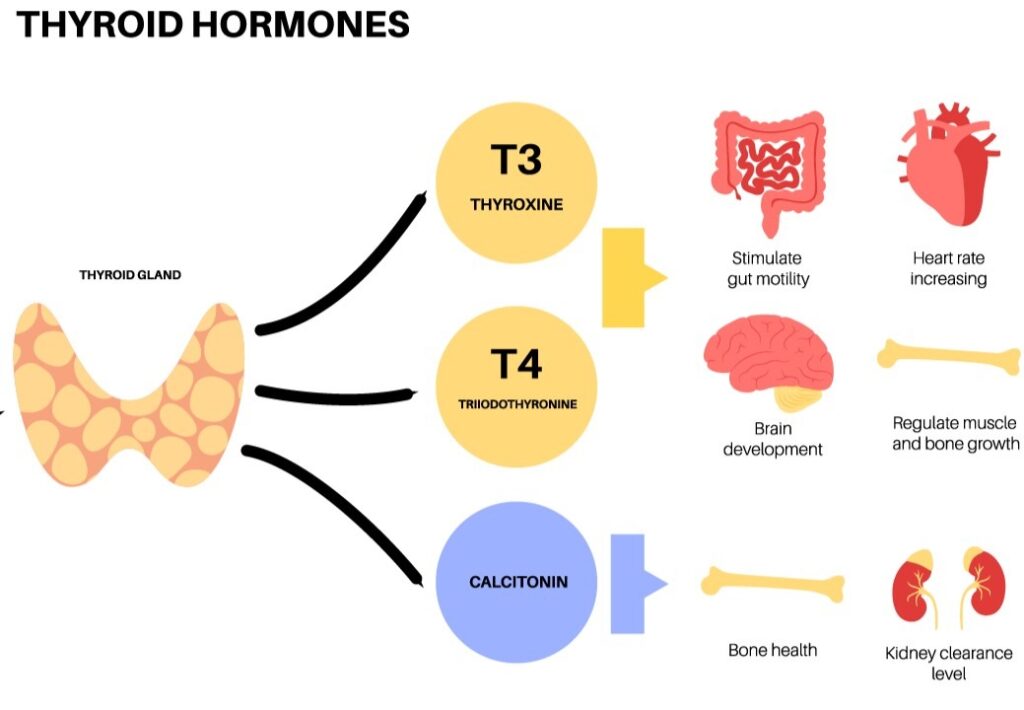
Most of what your thyroid produces is T4, the storage form. Your cells run on T3, the active form, so your body has to convert T4 into T3 in the gut, the liver, and other tissues. That conversion step is where a large share of thyroid problems actually begin — and it is exactly the step standard lab work rarely checks.
When thyroid output drops, everything slows down at once. Heart rate, digestion, mood, mental speed, body temperature, hair growth. That is why low thyroid shows up as symptoms all over your body instead of in one spot.
What Is Hashimoto's Disease?
If you have been diagnosed with Hashimoto’s thyroiditis, quite simply you are living with an autoimmune condition where your own immune system is attacking your own thyroid gland.
The next question is always……BUT WHY WOULD MY BODY DO THAT?
That’s a great question and the reason why you’re reading this - to get a better understanding of the cause of Hashimoto’s because once you know the cause, you can make changes to address that cause and RECLAIM YOUR POWER TO HEAL IT.
Here is what is happening mechanically. In Hashimoto's, your immune system produces antibodies — mainly TPO antibodies and thyroglobulin antibodies — that tag thyroid tissue for destruction. Those antibodies are the fingerprint of the disease, and they are often elevated years before your TSH ever moves out of range. Many people with Hashimoto's are told their thyroid is "fine" right up until the gland has taken real damage.
If you are still unsure whether your diagnosis is truly autoimmune, we break the difference down in telling whether your thyroid problem is Hashimoto's.
How Is Hashimoto's Different From Plain Hypothyroidism?
People use "hypothyroidism" and "Hashimoto's" interchangeably, but they are not the same problem. Hypothyroidism describes a gland that is not producing enough hormone. Hashimoto's describes an immune system that is actively destroying the gland. One is a status; the other is an attack that keeps causing the status.
| Hashimoto's hypothyroidism | Primary hypothyroidism (no autoimmunity) | |
|---|---|---|
| What drives it | The immune system attacks and slowly destroys thyroid tissue | An underactive gland from iodine deficiency, surgery, radiation, or a medication effect |
| Antibodies | TPO and thyroglobulin antibodies elevated | Antibodies negative |
| How it unfolds | Gradual, with flares and remissions that follow stress, infections, diet, and hormone shifts | Steady decline tied to one specific cause |
| Lab pattern | Antibodies positive first; TSH swings high and low as the gland is damaged in waves | High TSH and low Free T4 in a stable pattern |
| Symptom picture | Classic low-thyroid symptoms plus brain fog, flares, and joint or muscle aches | Classic low-thyroid symptoms: fatigue, weight gain, cold intolerance, constipation |
| What thyroid medication does | Replaces missing hormone but does nothing to stop the immune attack | Replaces the missing hormone — usually the whole treatment |
| What else to look for | The trigger: gut damage, food sensitivities, infections, nutrient gaps | Nutrient status, especially iodine, iron, and selenium |
This distinction changes everything about treatment. With plain hypothyroidism, replacing hormone is often enough. With Hashimoto's disease, the medication replaces what the gland can no longer make while the attack continues — which is why so many patients stay symptomatic on a "perfect" dose. We go deeper on this in Hashimoto's vs hypothyroidism.
Why Would My Immune System Attack My Own Thyroid?
Let’s start here -
To understand Hashimoto’s, you have to look at your immune system NOT as a failing system, but as one that is “over-reacting."
In a standard environment, your immune system identifies and attacks external threats like viruses or bacteria in a tempered, measured manner. Think of your immune system like the U.S. Armed Forces. If there are a couple of rogue drug-running boats bringing illegal drugs and people up from South America, the Coast Guard will be called upon to deal with these couple of boats in a measured manner and…..problem solved.
But what if instead, the President of the U.S. declared war on these 2 boats, sending in the Marines, Army and Navy and then bombing these 2 boats and all boats looking like them along the shore, killing our own soldiers and US citizens at the same time?
That is an extreme over-reaction….and exactly how you should think about your Hashimoto’s!
You see, your immune system is overreacting to something else going on in the body and as a result, has misidentified your thyroid gland——as a foreign invader as well. In Hashimoto’s, because your thyroid is under constant attack from your over-reacting immune system, it begins to struggle to do its job.
This is Hashimoto’s hypothyroidism.
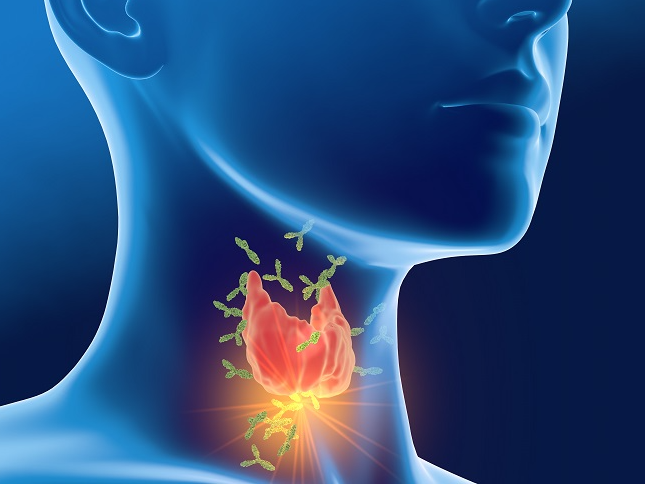
The "something else" is rarely one thing. It is usually a pile-up: a gut lining that has become permeable, a food the immune system keeps reacting to, a virus that never fully left, a nutrient the immune system cannot function without. The thyroid becomes the collateral damage because the attack has lost its precision.
What Happens to the Thyroid During the Attack?
There is a cellular battle taking place in your neck.As healthy thyroid tissue is replaced by scar tissue during this process, the gland starts losing its ability to manufacture hormones and your "fuel levels" begin to drop.
While this is happening in your neck, your brain is watching closely. Your pituitary gland senses that your hormone levels are dropping. It responds by pumping out massive amounts of TSH (Thyroid Stimulating Hormone). When you look at your lab results and see a high TSH, you are seeing your brain "screaming" at your thyroid to work harder……and your Doctor sees a prescription for thyroid medication in your immediate future (levothyroxine, synthroid, armour thyroid, NP thyroid, etc.).
Two lab markers tell you an attack is in progress: TPO antibodies and thyroglobulin antibodies. TSH only tells you the gland is falling behind. Antibodies tell you something is destroying it. Those are different pieces of information, and only one of them points at a cause.
This is also why thyroid symptoms can arrive long before a diagnosis. The gland has reserve capacity, so it can lose function gradually while your numbers still look acceptable on paper. The symptoms are real because the cellular shortfall is real, even when a single screening marker has not crossed a line yet.
What Goes Wrong When Hashimoto's Is Only Treated With Medication?
The tragedy of Hashimoto's is this -
Your Doctor (your primary or your endocrinologist) tells you that you need to get on this medication and mentions nothing (and I mean ZERO) about what’s actually causing the problem. Then for years, you might be on this medication that is “masking” the problem but not addressing it. During that time, the thyroid becomes so damaged by these unrelenting antibodies (thyroid medications do nothing to stop your immune system from attacking your own thyroid gland) that it loses its ability to every properly work again
The communication between the brain and thyroid is lost….forever.
- Sometimes this manifests as small scar tissue nodules in the thyroid.
- Sometimes this manifests as the entire thyroid gland swelling (goiter).
- Sometimes this manifests as thyroid cancer.
And in almost all of these cases, this could have been avoided.
HOW?
To do this, you must know the “WHY”......why does your immune system do this?
The medication conversation is not the whole conversation. Replacing hormone is sometimes necessary — when the gland is badly damaged, replacement is what keeps you functioning. But replacement is not the same as addressing the immune attack, and the attack is what keeps driving the damage, the dose increases, and the symptoms that never fully go away.
The cause is findable. A free 15-minute discovery call will tell you which testing would actually explain your Hashimoto's.
Book Free Discovery CallWhat Causes the Immune System to Overreact?
Remember, this all started when your immune system over-reacted to some mild problem (remember my bombing of drug boats example from earlier). Well there are multiple reasons why your immune system might over-react:
- Leaky gut due to gluten or dairy sensitivities
- Unhealthy microbiome due to several different factors including (stress, toxins, poor diet)
- Other food sensitivities to soy, coffee, alcohol and processed foods
- Consuming too many raw goitrogenic vegetables
- Nutrient deficiencies common in the U.S. including iodine, iron, ferritin, vitamin D, B12, selenium, zinc, magnesium, and thiamine (B1)
- Viral infections that the immune system has a hard time dealing with
- Hormonal imbalances leading to estrogen dominance
Each of these is a different switch, and most patients have more than one turned on. Gut damage keeps the immune system activated at the border. Food reactions keep fueling it. Viruses keep it in a state of alert. Missing nutrients remove the brakes — selenium, zinc, vitamin D, and iron are all required for the immune system to regulate itself and for T4 to convert to active T3 in the first place.
Testing is what separates the list of possibilities from your list of causes. A food sensitivity panel shows which foods your immune system is actually reacting to, so the elimination plan is based on evidence instead of a guess.
This is also where estrogen dominance fits in. When estrogen rises relative to progesterone, it increases thyroid binding globulin, which holds onto thyroid hormone and leaves less free, usable hormone for your cells. That single mechanism can keep you symptomatic on labs that look acceptable.
The point of listing all seven is not to make you suspicious of everything. It is to show that every item on it is identifiable. None of these causes hide from the right test — and none of them get fixed by a higher dose of thyroid hormone. That is the difference between managing a diagnosis and actually resolving a problem.
How Do You Find What's Causing Your Hashimoto's?
And that’s where I come in.
To reclaim your thyroid gland and your overall health - you’ve got to figure which of these things are causing your Hashimoto’s….
- This requires comprehensive testing that insurance doesn’t want to pay for
- This requires an understanding of the testing and how to address these imbalances from a natural, diet & lifestyle perspective
- And finally, and this is important, this requires working with a Doctor who is not interested in masking the problem with a drug (levothyroxine, synthroid, armour thyroid, NP thyroid) because that’s what the insurance company says or what they’ll pay for.
The testing behind this approach is what we call the Root-Cause Thyroid Protocol: a full thyroid panel that includes antibodies and Reverse T3, plus gut, nutrient, immune, food sensitivity, and hormone testing interpreted together. Not twenty disconnected tests — one picture of what is actually driving your case.
At our Wilmington, NC office, Dr. Rutledge and Dr. Bradshaw work through this with patients from Wilmington, Leland, Jacksonville, and across coastal NC. The plan that comes out of it is built around what your testing shows, not around a generic thyroid protocol.
What Should You Do Next?
So here’s what you do:
I offer a free, 15-30 minute phone call consultation (a Discovery Call) to determine if you're a good fit for my office and to have any of your questions answered. From there we can discuss what tests you need (that your Doctor has ignored) and get some answers. Click here to take advantage of this offer - schedule that free call and start your journey to finally fixing your issue.
Don't suffer with thyroid problems / Hashimoto’s any longer. Let's find out what’s causing your Hashimoto’s, and stop masking the problem - let's finally solve it!
Find the cause, not just the prescription. Book the free call and we'll tell you exactly which tests would move your case forward.
Book Free Discovery CallFrequently Asked Questions
Is Hashimoto's the same as hypothyroidism?
No. Hashimoto's is an autoimmune disease that attacks the thyroid gland; hypothyroidism is the low-hormone state that often results. Hashimoto's is the most common cause of hypothyroidism in the US, but they are not the same thing.
Can Hashimoto's be cured?
Hashimoto's is a chronic autoimmune condition, but its drivers — food sensitivities, infections, nutrient deficiencies, stress — can be found and addressed. Many patients see antibody levels drop and symptoms improve once those triggers are handled.
What tests confirm Hashimoto's?
TPO (thyroid peroxidase) and thyroglobulin antibodies confirm the autoimmune attack. A complete thyroid panel — TSH, Free T4, Free T3, Reverse T3 — shows how the gland is actually functioning. Standard screening usually checks TSH alone.
What doctor should I see for Hashimoto's?
A practitioner who runs full thyroid and root-cause testing — not just TSH — and looks for the triggers behind the autoimmune attack. In Wilmington, NC, Dr. Hilary Rutledge and Dr. Mathew Bradshaw take exactly that approach.